
From T-Shape to O-Shape people
"Without AI, this would have taken me three times as long."
Hey guys, I wanted to share some personal thoughts on how AI is actually increasing our daily workload rather than reducing it.
Let’s step away from the professional world for a moment. What I’ve been able to accomplish lately—open-source projects, home automation, and other "nerdy" personal tech—has only been possible because of Generative AI (specifically ChatGPT Pro).
How many times have you heard someone say, "Without AI, this would have taken me three times as long"?
It’s absolutely true, my friends. This reality has already fundamentally changed our professional mindsets as well, and there is no turning back. Looking at the professional landscape over the last few months, here is a quick summary of the shift we’ve seen:
- The Rush: "As a company, we must embrace Generative AI or we’ll be left behind!"
- The Hype: "We are riding the AI wave. Everyone needs to start using it now!"
- The Enthusiasm: "We are delivering faster than ever! Let's keep pushing!"
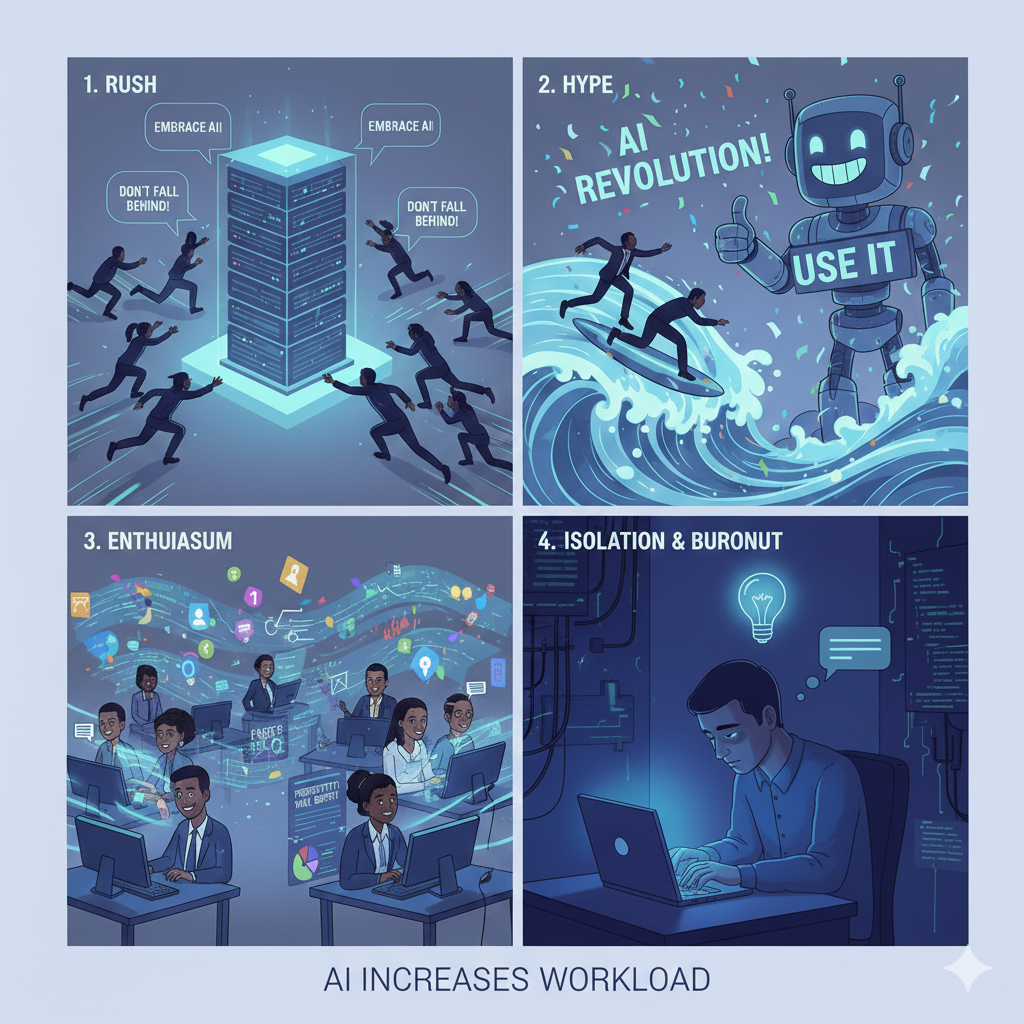
The reality is that, thanks to Generative AI, we are (or we will, it depends on which phase you are) producing more (software features, for example) with fewer people. This raises a critical question: Is this sustainable in the long term? Are these people able to keep pushing in the mid/long term?
People are becoming increasingly dependent on AI, and we shouldn't ignore the consequences. This "addiction" is creating side effects that aren't immediately visible while business leaders focus solely on output and tech teams remain caught up in the hype.
One of the most immediate side effects is the decline in human interaction. Developers are increasingly becoming "solo acts" because almost any technical stuff can be cleared by a few AI agents.
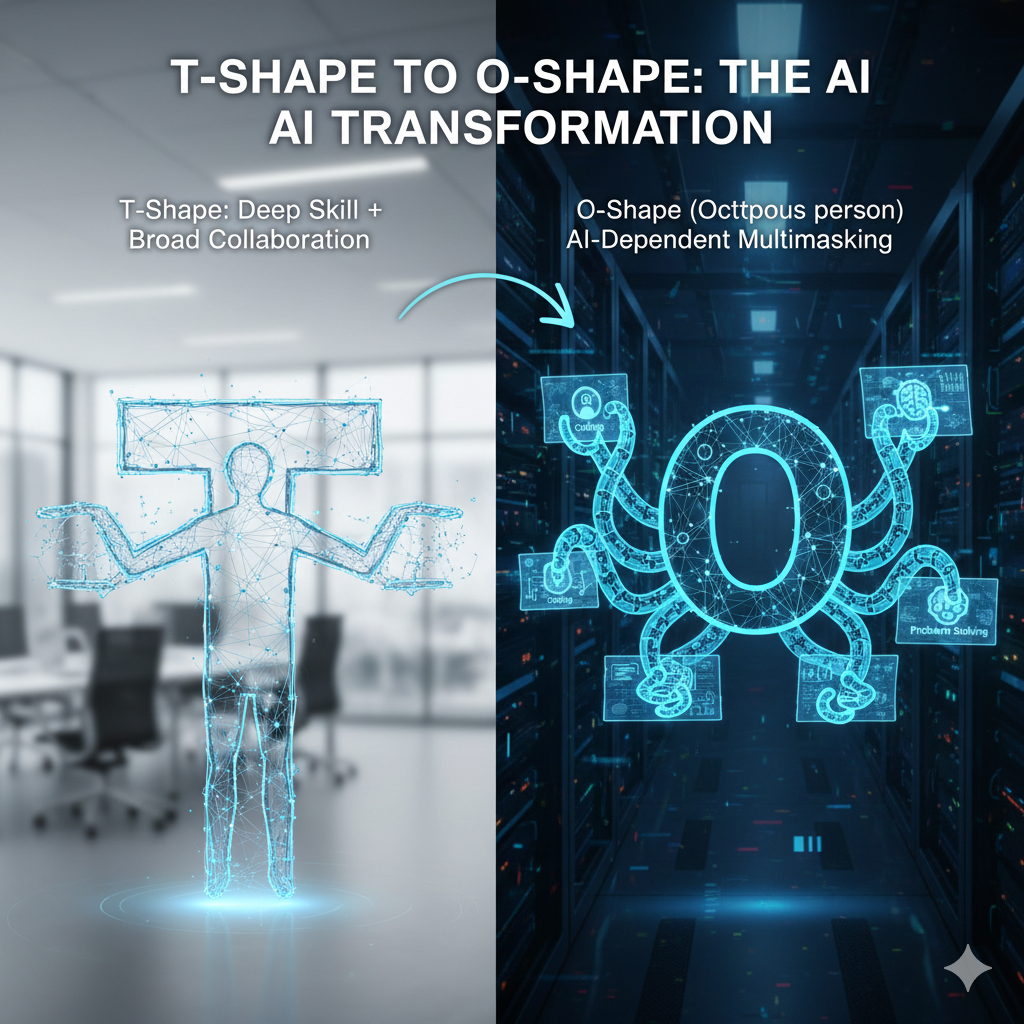
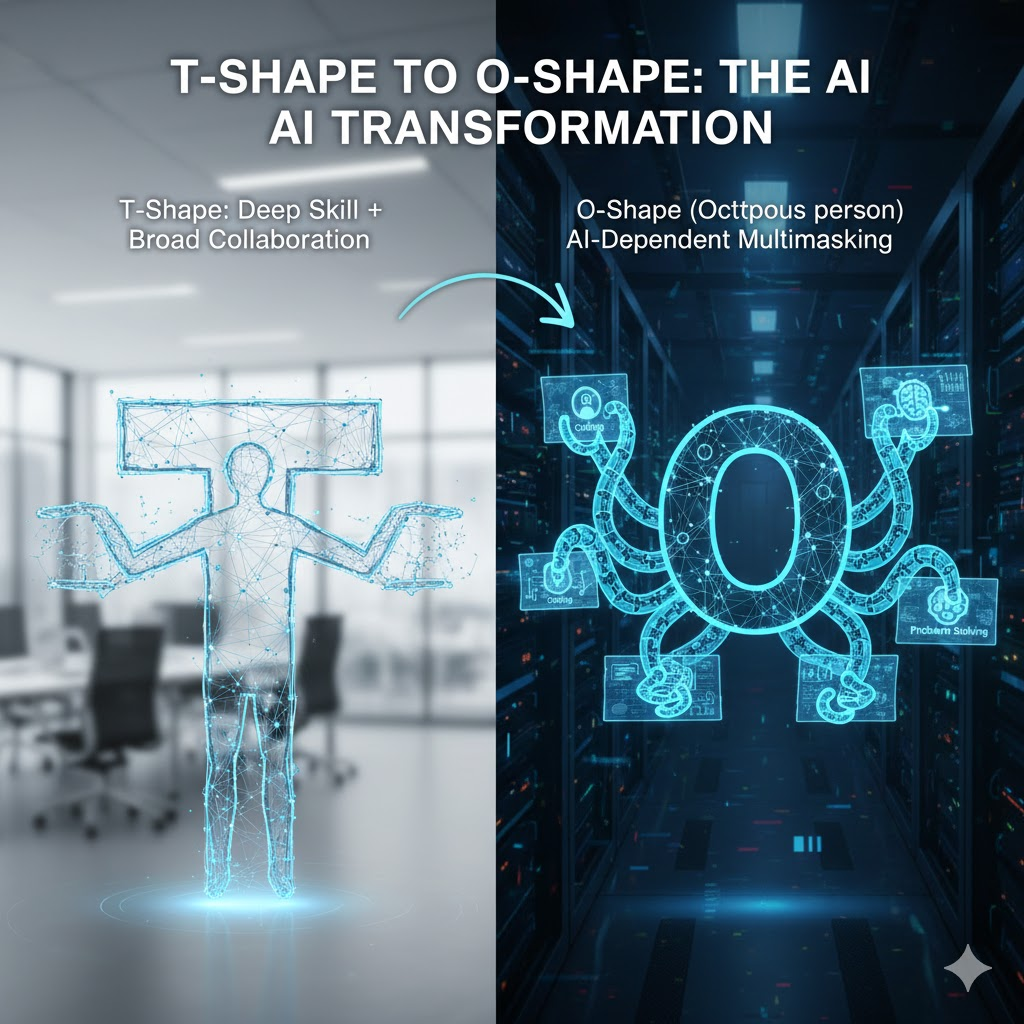
We are somehow switching from T-shape people to O-shape people where O stands to Octopus.
I experienced this recently myself. Over the last few days, I managed to resolve several tedious PC configuration issues on my own—tasks that would typically be handled by a company Help Desk. The result? I didn't need to call anyone. I just prompted the AI and got the solution.
At first glance, that sounds great right? I bypassed the ticketing system, the waiting, and the follow-ups. But the hidden cost was the total lack of human interaction. I worry we are headed toward a future where this isolation becomes chronic and we stop needing to talk to one another entirely.
What is a skill that a human have compared to AI agents? Creativity. 💡 And how is creativity fueled? By human interaction.
We need to act before we lose that spark. Companies should start implementing "Healthy AI" boundaries. For example, we could try reducing AI usage during specific blocks of time—like "AI-Free Fridays" or between 3 PM and 6 PM daily.
I know, you could think that I've totally lost my mind but this is my feeling 🤷♀️
While this might seem like a step backward for tech progress, it’s actually an investment in our humanity. It forces us to reconnect, collaborate, and rediscover the creativity that only happens when people talk to people.
...and let me raise one final question (for today, at least). How can we prepare our organizations to remain resilient during a "No AI" scenario?
I’m talking about a situation where the major players providing GenAI services face a massive, prolonged disruption, leaving us like

Will our employee be ready ? I am not.
Of course my questions is provocative, my though is that we are only at the very beginning of this revolution.
I'd like to have your opinion as well.
Inspired by:AI Doesn't Reduce Work; It Intensifies It (HBR 2026)

